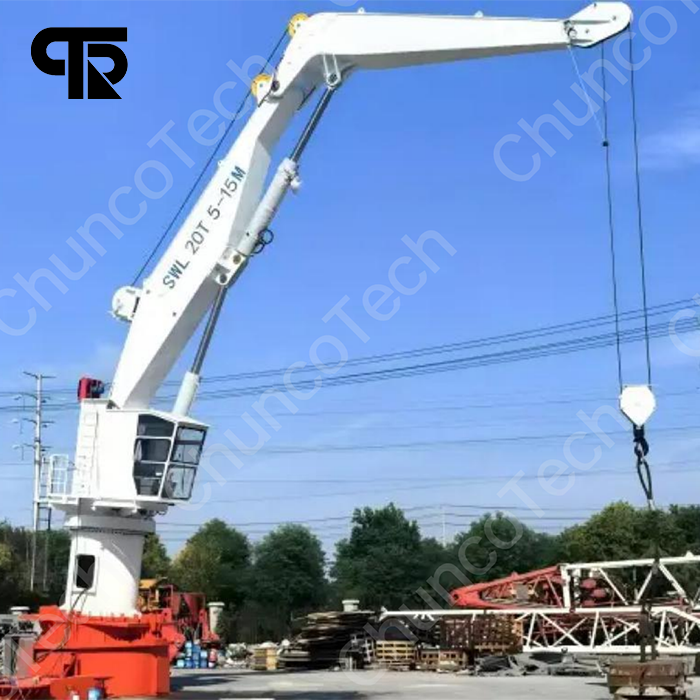
Opting for a lifting device, the option often amounts to articulated boom versus fixed jib. Straight boom grant straightforwardness and are advantageous for erect lifts, but pivoting cranes offer heightened maneuverability, empowering access to tight spaces. Deliberate on the job site; if you’re largely facing limitations or require more involved positioning, a segment crane is predictably the leading option. However, for unobstructed areas and straightforward lifts, a fixed arm might result in a greater affordable resolution.
Familiarizing with Rigid Crane Arm Lifters: Purposes and Pros
Stiff arm hoists represent a custom type of lifting up equipment, constructed for hefty load handling in difficult settings. Their principal quality is a strong jib arm formation, which supports for unerring positioning and superior stability, especially when operating in restricted spaces or at considerable heights. Common uses encompass bridge building, production tasks, power field placement, and public works progress. The key benefits are increased shielding, strengthened proficiency, and the means to perform tasks that may be impractical with traditional machinery. This corresponds to reduced payments and elevated plan consequences.
STS Cranes: The Masters of Quay Container Operations
Modern colossal STS elevators represent the crowning point of engineering realization in the container industry. Designed to efficiently load and relocate containers between flotillas and the berth, they are vital for the continuous operation of modern marinas. Their altitude – often exceeding one hundred span – and amazing capability allow them to handle the biggest container boats currently in work, fundamentally forming global business.
Knuckle Boom Cranes: Flexibility in Handling Missions
Knuckle boom lifters are recognized for their exceptional elasticity, providing machinists with a distinct advantage in variegated elevating operations. Incorporating a articulating boom fragment, these heavy-duty equipment can maximize around interruptions and deposit loads in cramped spaces. This trait makes them ideal for implementations in building, dispatching, utility assignments, and more other domains. Ultimately, knuckle boom hoists offer a beneficial remedy to hard hoisting conditions.
Straight Boom Cranes: Precision and Security Defined
Rigid lifting boom machines are well-known for their notable power to deliver spot-on lifting and placement of objects. Compared with articulating models, their uncomplicated design generates inherent firmness, making them appropriate for engagements requiring significant amounts of guidance and negligible movement. This quality is markedly indispensable in building sites and areas where severe tolerances are critical.
Stiff Lifting Apparatus Advantages: Once Toughness Plays a Role
Conventional jib devices often face challenges with deformation, especially when hoisting dense loads or functioning at considerable lengths. Yet, firm jib arm installations produce a decisive perk by minimizing unwanted sway. This enhanced control results to reliable processes, better exactness, and a decreased likelihood of weight movement. Therefore, heavy-duty lifting are best for tasks where structural integrity is paramount.
Wharf Cranes: A Comprehensive Overview into STS Systems
A wharf lifting apparatus setup represents such key component within modern shipping ports. These quay handlers are intricate assemblies created to promptly discharge containers taken from immense seagoing ships by ground networks. Its process depends on exactness design and built-in operations to secure safety and raise capacity.
Evaluating Hoisting Kinds: Variflex, Linear, Fixed, and Pier
Opting for the ideal hoisting equipment for a distinguished application is imperative. While many alternatives exist, four normal forms – articulating cranes, linear cranes, luffing cranes, and jetty cranes – exemplify significantly diverse abilities. Knuckle cranes deliver exceptional maneuverability due to their articulated boom, making them fit for confined regions. Straight cranes furnish pliable span through their expandable segment, prime for widespread heaving requirements. Heavy-Duty cranes conserve a erect division, best for meticulous placements where balance is imperative. Finally, Ship-to-Shore cranes, designed specifically for parcel transport at wharves, contain large handling load and considerable length.
- Variflex Lifting Models
- Linear Apparatus Varieties
- Rigid Handler Classes
- Ship-to-Shore Lifter Categories
Distinct Progression About STS Cranes: Directions and Progress
Over recent periods, STS (Ship-to-Shore) crane engineering has undergone a substantial metamorphosis, fueled by needs for enhanced port output. Early STS cranes were mildly simple systems, utilizing basic lifting mechanisms. Now, today's STS cranes include sophisticated mechanization, including modern control systems, flexible positioning characteristics, and enhanced safety measures. A key direction is the adoption of electrified propulsion, decreasing exhalations and raising operational reliability. What’s more, the rise advancement remote operation and data-driven maintenance are reshaping the area concerned with STS crane control. The possibility sees lasting stress on capacity utilization and the manufacture of even bigger cranes to support significantly bigger container ships.
Stiff Boom Crane